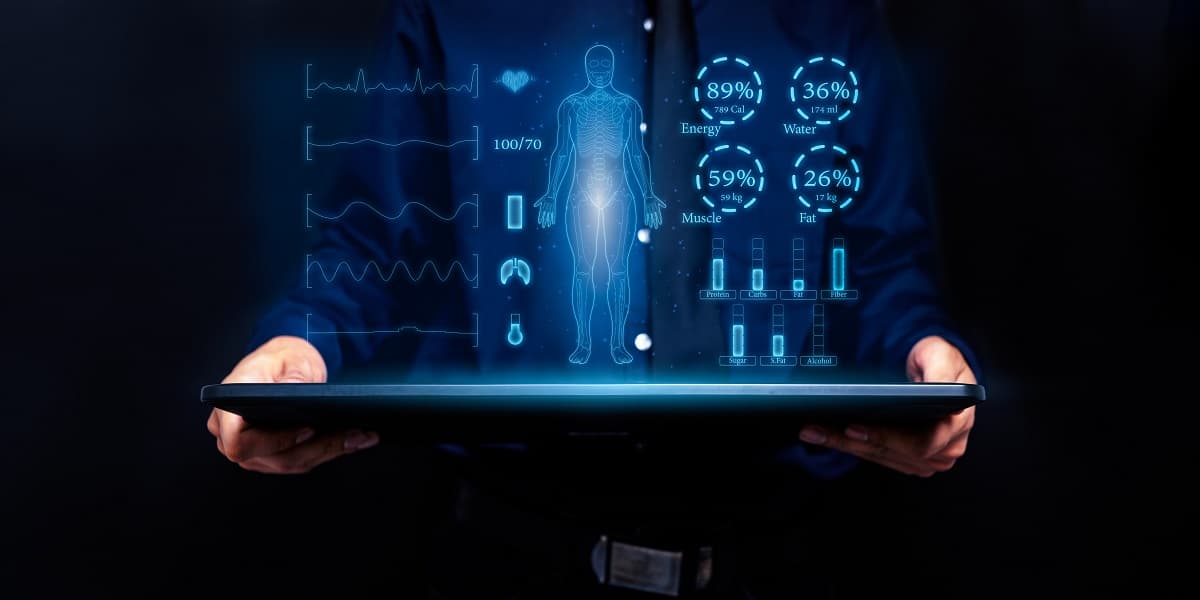


COMPREHENSIVE DIGITAL HEALTH SOLUTIONS
Our technologies at a glance: Clinical Intelligence Infrastructure for structured digital healthcare
CLINICAL INTELLIGENCE POWER AGENT
Clinical Intelligence Interface [LIVE]
- AI for clinical reasoning, clinical assessment support suspicion, exploration guidance and therapeutic workflow execution — in practice, not just in theory
Clinical Intelligence Infrastructure for Real-World Healthcare [LIVE]
- From data to longitudinal clinical understanding
- WaveLens™ supports structured observation of visible biological change without disclosing internal technical methods.
- VDMHealth uses AI within a governed clinical infrastructure designed to structure observations, connect biomarker signals, support longitudinal monitoring and generate evidence under professional oversight.
Coming Soon
Eye Device [Q1 2027]
- Portable eye and fundus scanning device connected to multiple AI diagnostics — in development, Q4 2026.
Clinical intelligence POWER AGENT
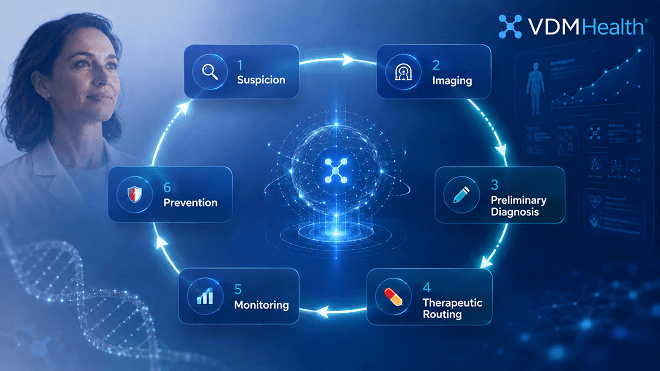
AI is the amplifier. Evidence is the moat.
VDMHealth uses AI within a governed clinical infrastructure designed to structure observations, connect biomarker signals, support longitudinal monitoring and generate evidence under professional oversight.

Scalable Clinical Intelligence Solutions
One AI platform for medical imaging, skin intelligence and remote care. Choose the solution that matches your organisation’s priorities.
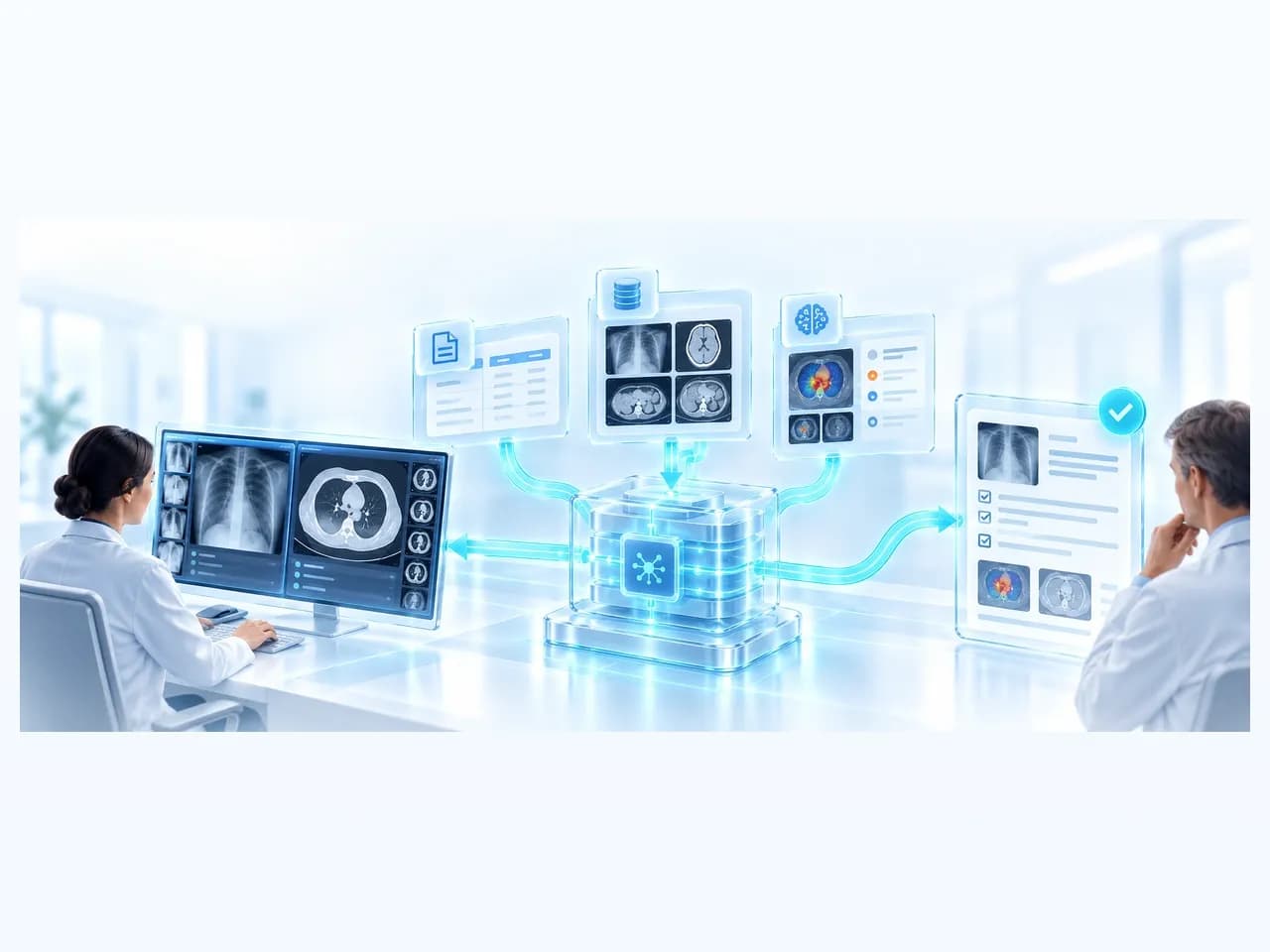
MIC - Medical Imaging Center — For imaging networks and hospital teams. A RIS Integration & Intelligence Gateway designed to connect existing systems, bring AI results into reporting and support quality and context review.
Focus: integration, reporting, governed AI.
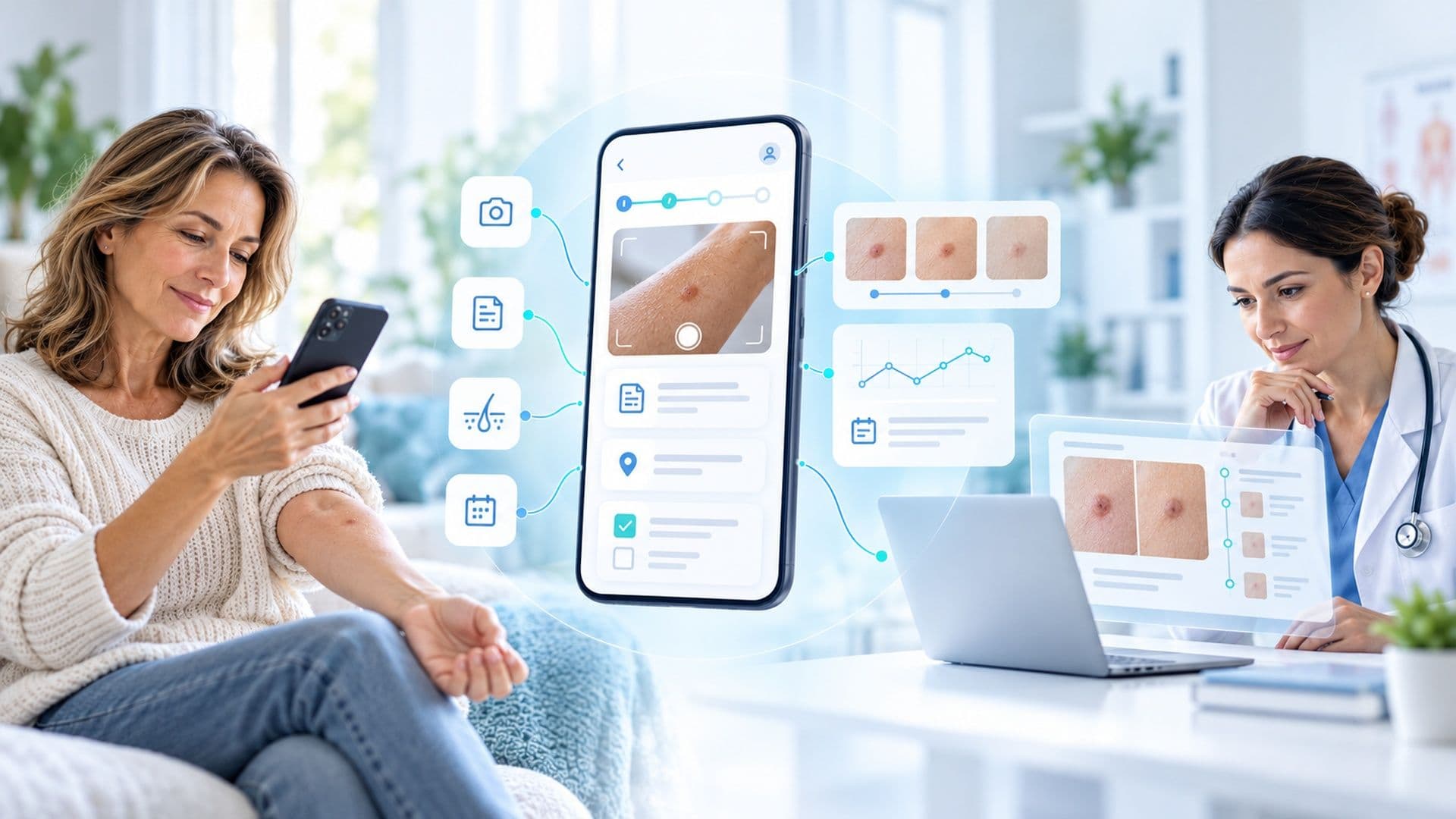
**Skin Care — For wound care teams, dermatology services and skin care organisations. ** Guided capture and longitudinal evidence designed to support skin assessment and follow-up.
Focus: observations, imaging, continuity.
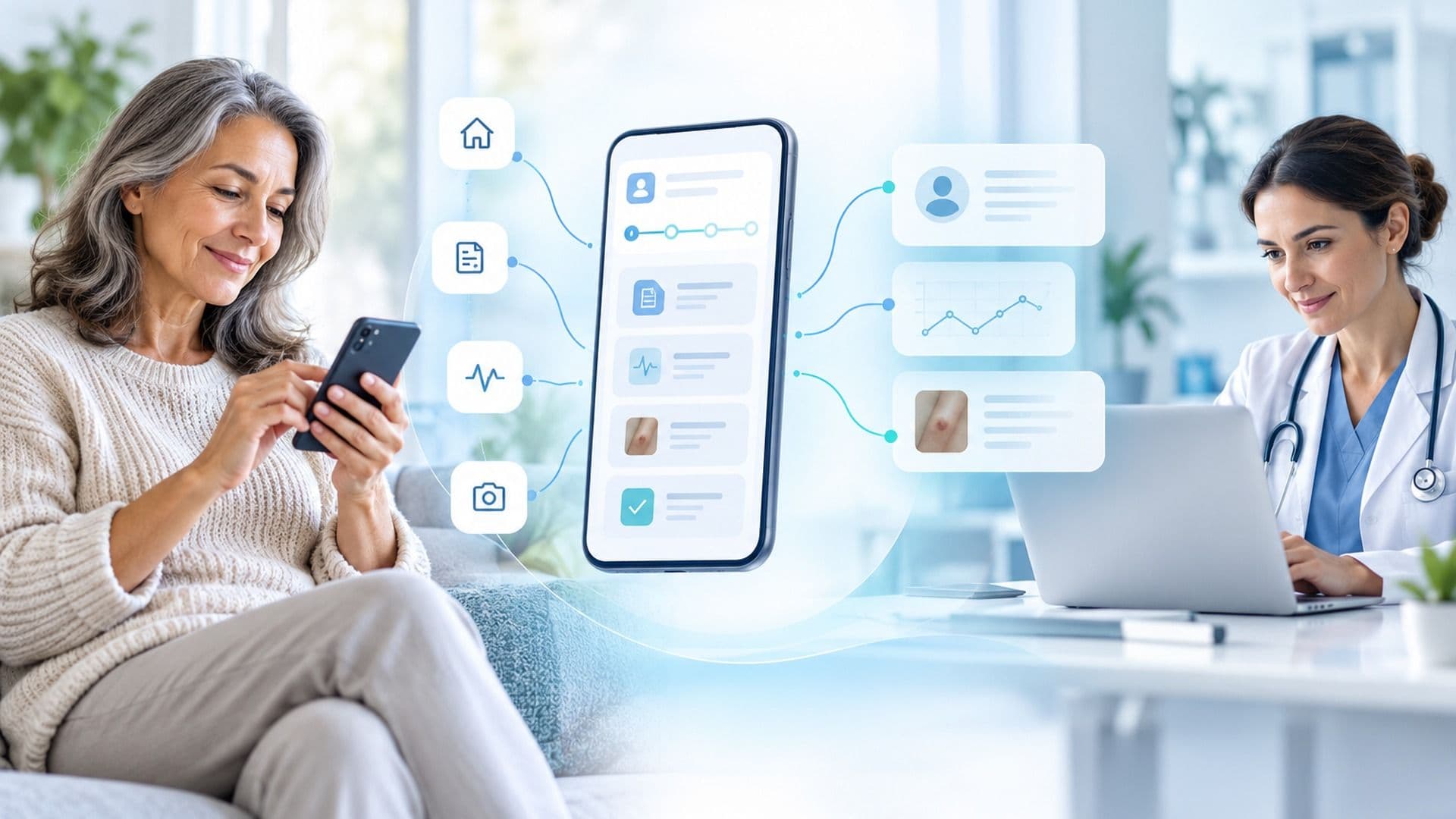
Virtual Kiosk — For healthcare providers, insurers and remote care networks. A distributed digital front door designed to connect intake, supported devices and professional care pathways.
Focus: access, navigation, remote episodes.
COMPREHENSIVE DIGITAL HEALTH SOLUTIONS
Start with the workflow you need to improve, then explore the relevant solution. Each combines shared AI capabilities with specialised workflows to support professional assessment, documentation and follow-up within your organisation’s care environment.
EXPLORE SOLUTIONS FOR YOUR ORGANIZATION
Skin Intelligence Platform - The AI-Powered Wound Intelligence Platform
- AI medical agent with clinical reasoning
- Preliminary diagnosis support
- RGB AI tissue classification
- Pseudo-hyperspectral biomarkers (WaveLens)
- Predictive analytics & risk detection
- Longitudinal intelligence & trend analysis
- Escalation workflows & home AI monitoring
MIC-Imaging-and-Reporting
- Connect imaging systems. Bring intelligence into the workflow.
- A common layer for a heterogeneous imaging ecosystem
- Seven services for the imaging workflow
- Discover. Connect. Review. Confirm.
- Integration built around the interfaces you support
- Powered by imaging-focused Health Autopilots
- Governance at every integration step
- A phased path from discovery to accepted deployment
- Build your imaging integration roadmap
Virtual Kiosk.
- A digital front door for healthcare, wherever care begins
- Turn an interaction into a connected care episode
- One journey, from intake to follow-up
- Capabilities for distributed healthcare access
- Configure the entry point around your care network
- Powered by Health Autopilots
- Access that respects context, consent and clinical responsibility
- Start with one complete remote care journey
Coming Soon
Dermo-Aesthetic & Beauty Care
- Consumer-grade skin analysis
- AI beauty intelligence
- Massive addressable market
Shared infrastructure. Specialised workflows.
One intelligent healthcare foundation. Multiple specialised applications.
VDMHealth is built around a unified technology architecture that enables different healthcare solutions to share core intelligence, interoperability, governance and evidence services, while adapting to the specific needs of each clinical or operational environment.
Rather than developing disconnected applications, our ecosystem combines reusable Health Autopilots with specialised workflows designed around different healthcare challenges, professional roles and patient journeys.
This common architecture supports consistency, integration with existing systems and new care pathways without rebuilding the technology foundation.
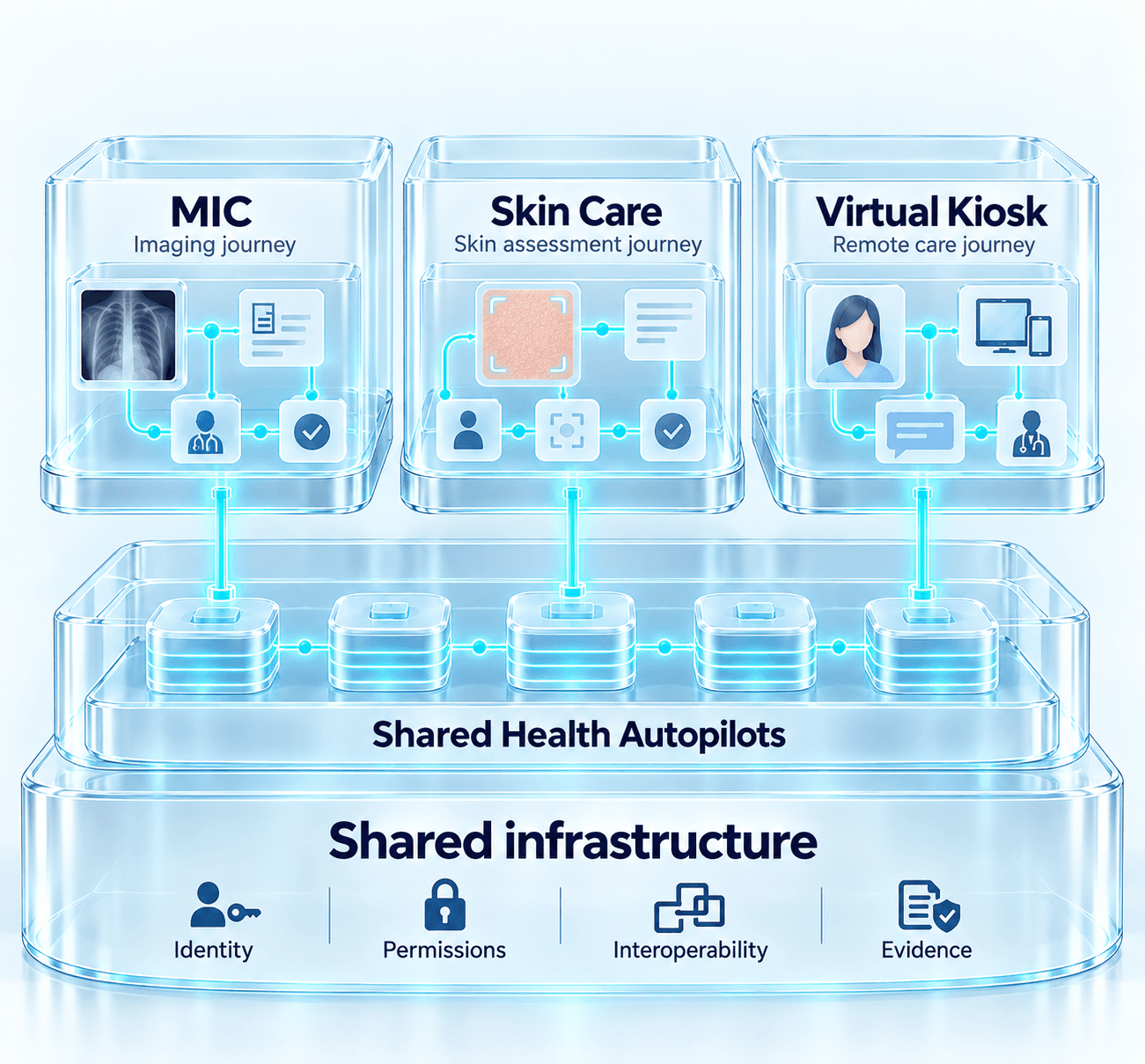
A common architecture brings together identity, access permissions, consent, interoperability and evidence management across the VDMHealth ecosystem.
These shared services provide a consistent framework for connecting information, managing authorised access and supporting traceable workflows across different healthcare applications.
Health Autopilots provide reusable intelligence and workflow capabilities that can be combined according to the needs of each solution.
From guided information capture and AI-assisted analysis to care navigation, professional review and longitudinal follow-up, these components support the development of specialised healthcare experiences while maintaining a shared technological foundation.
Every healthcare environment has its own requirements, information sources, professional responsibilities and care pathways.
VDMHealth applications are configured around these specific needs, connecting relevant technologies and services within defined workflows.
This enables solutions such as Skin Care, Medical Imaging and Virtual Kiosk to share common capabilities while addressing different healthcare challenges.

Reliable healthcare intelligence requires more than connecting systems. It also depends on understanding where information comes from, who can access it and how it can be used.
Our shared architecture is designed to support authorised data exchange, evidence traceability, configurable permissions and professional oversight, helping organisations maintain consistent governance across their connected healthcare workflows.
As healthcare needs evolve, specialised applications can be connected through shared services and coordinated workflows.
This creates opportunities to link initial screening, medical imaging, professional assessment, specialised care and longitudinal follow-up within a broader healthcare journey.
One shared foundation. Specialised intelligence. Connected care.

From use case to deployment
Working with your team to define workflows, assess interfaces and data, demonstrate agreed scope, and plan validation and deployment.
Agree the use case, users and intended purpose. Work with your team to agree the use case, intended purpose and target users. Map the workflow, clarify professional responsibilities and define the scope and success criteria. Define the workflow, assess available interfaces and data, demonstrate the agreed scope and plan the appropriate validation and deployment steps.
Review integration, data authority and readiness. Review existing systems, available interfaces and relevant data sources. Confirm data access rights, permissions and quality, and identify integration requirements, dependencies and readiness gaps.
Use an agreed demo or pilot scope with clear evidence. Explore the proposed workflow through a demo or pilot with an agreed scope and evaluation criteria. Gather evidence of performance, usability and workflow fit to inform validation and next steps.
Enable accepted capabilities with operational oversight. Introduce accepted capabilities once the agreed validation and deployment requirements are met. Support user onboarding, monitor performance and workflow execution, and maintain professional review, issue management and operational oversight.